

Maddie kowalski Eiffel Tower video was originally posted on a cloud storage app “TeraBox” and can be viewed here.
In the fast-paced world of social media, where private moments can explode into public spectacles overnight, few stories capture the raw vulnerability of internet fame quite like that of Maddie Kowalski.
As of late 2025, the phrase “Maddie Kowalski Eiffel Tower video” has become a trending search term across platforms like X (formerly Twitter), TikTok, Reddit, and Google. What began as whispers in college circles quickly escalated into a full-blown online phenomenon, blending elements of scandal, meme culture, and debates over privacy.
This article delves into the origins, content, spread, and broader implications of the controversy, shedding light on how a single leaked video reshaped one young woman’s life and sparked global conversations.
Maddie Kowalski is described in various online accounts as a typical college student from Florida, reportedly attending or associated with the University of Florida (UF) in Gainesville.
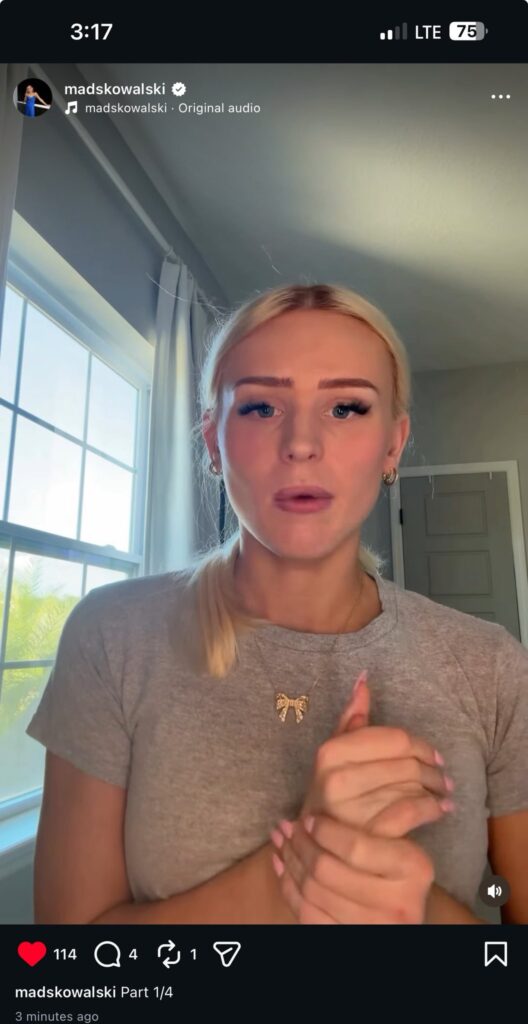
Prior to the viral incident, she maintained a low-profile existence—active on social media but far from an influencer. Sources portray her as a young woman in her early 20s, navigating the usual challenges of student life: classes, friendships, and social outings. Little public information exists about her background, which only amplified the shock when her name suddenly dominated trending topics in November 2025.
The controversy ignited around early November 2025, when private videos allegedly featuring Kowalski began circulating on social platforms. What is commonly referred to as “the Maddie Kowalski video” is not a single recording but reportedly a series of short clips—some accounts claim five separate segments. These clips depict explicit sexual content, shared without her consent, turning a personal encounter into non-consensual pornography, often categorized online as “revenge porn” or a leaked sex tape.
The key element that propelled the story to infamy is the association with the “Eiffel Tower.” In slang terms, particularly within adult and meme cultures, “Eiffel Tower” refers to a sexual position involving three participants—typically two men and one woman—where the men high-five over the woman, mimicking the shape of the famous Parisian landmark. Multiple sources, including Reddit discussions and viral explanatory articles, confirm that the leaked clips allegedly show Kowalski in such a scenario, involving her and two male participants. This explicit detail became the hook that fueled memes, jokes, and rapid sharing.
It’s important to note that the actual Eiffel Tower in Paris plays no role in the video. The landmark is not featured in the footage; the phrase is purely euphemistic. Some reports speculate that the term was initially used in captions or comments to describe the act, and it stuck as a searchable keyword, making “Maddie Kowalski Eiffel Tower” a go-to phrase for those seeking the content. Confusingly, one unrelated article from December 2025 describes a separate viral moment of a woman named Maddie Kowalski posing innocently with the real Eiffel Tower during a trip to Paris, but this appears to be a coincidence or misinformation, possibly involving a different person with the same name.
The spread of the video exemplifies the dark side of digital virality. It reportedly originated from private sharing—perhaps among acquaintances or ex-partners—and quickly leaked to platforms like Telegram, 4Chan, Reddit, and X. Within hours, searches for variations like “Maddie Kowalski UF,” “Maddie Kowalski video,” and “Maddie Kowalski Eiffel Tower” surged. Spam accounts and clickbait sites proliferated, promising “full videos” through shady links, often leading to malware or paywalls. On X, posts from December 2025 warn users about fake links while ironically promoting others, highlighting how profiteers exploit such scandals.
Reddit threads, particularly in subreddits discussing viral leaks or college gossip, became ground zero for discussions. Users debated the ethics of viewing or sharing the content, with some expressing sympathy for Kowalski and others treating it as entertainment. Comments ranged from crude jokes referencing the “Eiffel Tower” slang to calls for respect, noting how the leak could devastate her personal and academic life. One thread with hundreds of comments described the clips in detail, confirming the multi-person nature of the encounter, while emphasizing that it was not consensual distribution.
The impact on Kowalski has been profound. As a purported UF student, the leak rippled through campus networks, where tight-knit communities amplify such events. Reports suggest she faced harassment, judgment from peers, and potential mental health struggles. In an era where “doxxing” and online shaming are commonplace, victims of leaked intimate content often experience long-term trauma, including anxiety, depression, and difficulty trusting others. Kowalski’s story echoes high-profile cases like those involving celebrities, but as a private individual, she lacked the resources or platform to control the narrative.
Broader societal implications abound. This incident underscores the persistent issue of consent in the digital age. Laws in many places, including Florida, criminalize non-consensual sharing of intimate images, yet enforcement lags behind technology. Platforms struggle with moderation, as content is reposted faster than it can be removed. The “Eiffel Tower” meme-ification trivializes the act, turning a violation into casual humor and encouraging further spread.
Moreover, it highlights gender disparities in viral scandals. Women are disproportionately affected by leaks, often facing slut-shaming while male participants remain anonymous or unscathed. Discussions on forums point out how the slang itself objectifies the woman at the center, reducing her to a punchline. Advocacy groups argue for better education on digital consent and stronger protections.
Public reaction has been mixed. While some corners of the internet revel in the shock value, others condemn the voyeurism. Sympathetic voices call for empathy, reminding viewers that behind the keywords is a real person whose privacy was shattered. As one article poignantly notes, strangers treated Kowalski as “an object of investigation rather than a real person,” forgetting the emotional toll.
In conclusion, the “Maddie Kowalski Eiffel Tower video” is less about the Eiffel Tower itself and more a stark reminder of how quickly privacy can evaporate online. What started as private clips morphed into a euphemism-laden viral storm, fueled by slang, curiosity, and unchecked sharing. As searches continue to trend into December 2025, the story serves as a cautionary tale: in our connected world, one leak can alter lives forever. It calls for greater accountability—from platforms, lawmakers, and users alike—to prioritize consent and humanity over clicks and memes. Ultimately, cases like this beg the question: at what cost does our entertainment come?